Redefining What It Means to Build Software
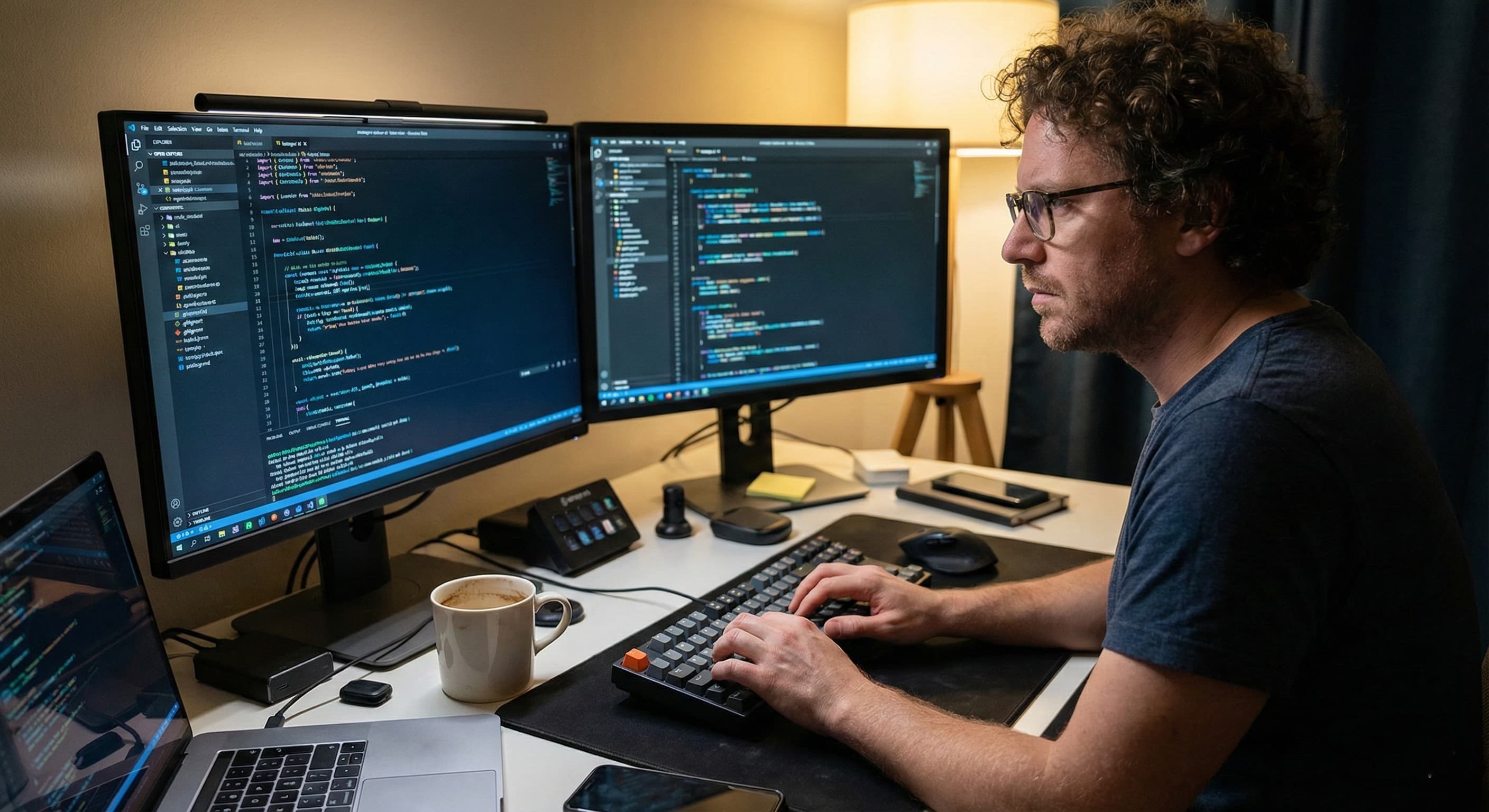
In early 2025, Andrej Karpathy one of the most respected minds in Artificial Intelligence, tweeted a phrase that sent a shiver down the spine of the software industry: "Vibe Coding."
He wasn't talking about a new programming language. He wasn't talking about a new framework. He was describing a new way of being. He described writing code by "fully giving in to the vibes," letting an AI handle the syntax while he managed the vision.
At first, people laughed. "Vibe Coder" sounds like a joke title you’d give a Gen Z intern who listens to lo-fi beats while breaking the production database. But the laughter died down quickly when people saw the results. Vibe coders were shipping apps, tools, and platforms faster than senior engineers could set up their development environments.
This shift has triggered an identity crisis. If you build software without writing the code yourself, who are you? Are you a developer? A designer? A fraud? Or are you the future?
This article explores the reality of the Vibe Coder, connects it to the lessons of the WordPress era, and finally answers the burning question: What do we call ourselves now?
Part 1: The Chef vs. The Creative Director
Let’s start with the question that started this conversation: Is a vibe coder a web developer?
The answer is nuanced: Technically no, but functionally yes.
To understand why, we have to look at intent versus implementation. For decades, being a "developer" meant you were a master of implementation. You knew the syntax. You knew memory management. You knew why the CSS grid was breaking on Safari.
A Vibe Coder doesn't necessarily know any of that.
The best way to visualize this difference is to look at a high-end kitchen.
The Traditional Developer is the Executive Chef
The Chef has knife skills. They understand the chemistry of emulsification. If a sauce breaks, they know exactly how to fix it using science and technique. They take pride in the process of cooking. If you ask them to make a meal, they physically chop the onions.
The Vibe Coder is the Creative Director
The Creative Director might not have great knife skills. In fact, they might burn toast if left unsupervised. But, they know exactly what the meal should taste like. They know how it should look on the plate. They know how the restaurant should smell.
They stand in the kitchen and tell a team of robot chefs (the AI): "Make it spicy. No, too spicy—add acid. Make the texture crunchier."
The Vibe Coder tastes the output and iterates until it matches their vision.
The "Oh Sh*t" Moment
The real difference between these two roles is revealed when things break.
When a Traditional Developer sees an error, they read the stack trace, find the line number, and rewrite the logic.
When a Vibe Coder sees an error, they copy it, paste it back into the AI, and say, "Fix this."
So, are they developers? In the sense that they are writing syntax? No. But in the sense that they are shipping working software that solves user problems? Absolutely.
Part 2: The WordPress Lesson (Developer vs. Implementer)
To legitimize the "Vibe Coder," we don't have to look at the future. We just have to look at the past. We have seen this exact dynamic play out before with WordPress.
For the last 15 years, the web industry has drawn a line in the sand between two types of professionals:
The WordPress Developer: Someone who writes custom PHP plugins, manages databases, and builds themes from scratch.
The WordPress Implementer: Someone who installs a theme, uses a page builder (like Elementor or Divi), and configures plugins to build a site.
Is the Implementer a "Developer"? Most industry pros would say no. They are "Site Builders."
However, the Implementer is often more valuable to a small business. The Implementer can build a marketing site in 2 days for $2,000. The Developer might take 2 weeks and charge $10,000. The client doesn't care about the PHP code; they care that the contact form works.
Vibe Coding is the evolution of the "Implementer." But there is a massive difference. A WordPress Implementer is limited by the tools. If the plugin doesn't do X, they can't do X.
A Vibe Coder is not limited. Because they use AI to generate raw code, they can build anything a traditional developer can build—custom apps, SaaS platforms, complex logic—without knowing the syntax. They are "Implementers" with superpowers.
Part 3: The "Vibe Designer"
This brings us to the visual side of things. If you are vibe coding the frontend, are you a Web Designer?
Yes. In fact, Vibe Coding is arguably the purest form of design that has ever existed.
Traditional web design is full of friction. You have to learn Figma or Photoshop. You have to draw rectangles. You have to mess with hex codes. You have to drag pixels left and right.
Vibe Coding removes the mouse and replaces it with language.
Traditional Designer: Draws a button, adds a drop shadow, changes font size manually.
Vibe Coder: "Give me a retro 90s cyberpunk aesthetic. Neon green buttons that glow when I hover. Use a monospace font."
Tools like v0.dev and Lovable are doing for web interfaces what Midjourney did for illustration. They turn words into UI.
But here is the catch—and it’s a big one: You still need taste.
The AI can write the code, but it cannot judge beauty. If you ask for "a modern website" and you have no eye for spacing, typography, or hierarchy, the AI will give you a generic, soulless, or ugly result. A Vibe Coder acting as a designer is a Curator. Your value isn't in drawing the pixels; it's in looking at what the AI produced and knowing why it looks wrong, then asking the AI to fix the padding or contrast.
Part 4: Why "Web Designer" is Too Small a Title
This is the point where many Vibe Coders get stuck. You start building a website. Then you ask the AI to write a Python script to automate your emails. Then you ask it to build a simple iOS app to track your habits.
Suddenly, you are staring at a portfolio that includes:
A React Web App
A Python Automation Bot
A Swift Mobile App
If you call yourself a "Web Designer," you are lying to your clients and underselling yourself. "Designer" implies you only care about how things look. "Python" implies logic, data, and engineering.
The Vibe Coder is the ultimate Generalist. The superpower of the Vibe Coder is that they are Language Agnostic. They don't need to spend 4 years learning Computer Science to switch from Web to Mobile. They just change the prompt.
Because you are building logic, handling data, and creating functional applications across multiple platforms, you have left the world of "Design" and entered the world of Product Engineering.
Part 5: Professionalizing the Vibe (What to put on your LinkedIn)
So, we know what you do. You orchestrate AI to build full-stack software across different platforms. But "Vibe Coder" sounds unprofessional, and "Web Developer" implies you know syntax that you don't actually know.
What do you call yourself?
Based on our breakdown of the industry, here are the three professional paths for a Vibe Coder.
1. The "Product Engineer" (The Builder)
This is the most accurate title for someone who uses AI to build apps.
Why it fits: "Engineering" implies building a structure that works. "Product" implies you care about the outcome, not the code.
The Pitch: "I don't just write code; I engineer complete products. I use AI-augmented workflows to move from idea to MVP in days, not months."
2. The "Rapid Prototyper" (The Corporate Asset)
Companies are desperate for this role. They have ideas, but their engineering teams are bogged down in backlog.
Why it fits: It sets the expectation of speed. You aren't building the "forever code"; you are building the "proof of concept."
The Pitch: "I can take your stakeholder's napkin sketch and turn it into a working, clickable, functional application by Friday."
3. The "Technical Generalist" (The Solver)
This is for the Vibe Coder who builds Python scripts, web apps, and mobile tools indiscriminately.
- Why it fits: It highlights your versatility. You aren't a specialist in React; you are a specialist in solving problems using whatever tech stack the AI recommends.
The Future is Hybrid
The boundaries are dissolving.
In 2020, you were either a Coder or a Non-Coder. In 2025, we are all just Builders.
The Traditional Developers are becoming Vibe Coders because it makes them faster. They use AI to write the boring stuff so they can focus on the complex architecture.
The Vibe Coders are slowly becoming Developers because they are learning by doing. After asking the AI to fix a Python error 50 times, you eventually start to recognize what Python syntax looks like. You start to understand the logic.
A Product Engineer… a Maker, or a Vibe Coder, the reality is the same: The barrier to entry for creation has collapsed.
You no longer need permission from a compiler to build your idea. You just need a vision, a prompt, and the "vibe" to see it through.